Blog
 IFTIKHAR UL HAQ
August 31, 2026
15 min read
Their Names Were Zainab. Farishta. Aizal. Ayat. We Read Their Names. Then We Moved On.
 IFTIKHAR UL HAQ
August 31, 2026
15 min read IFTIKHAR UL HAQ
August 31, 2026
15 min read
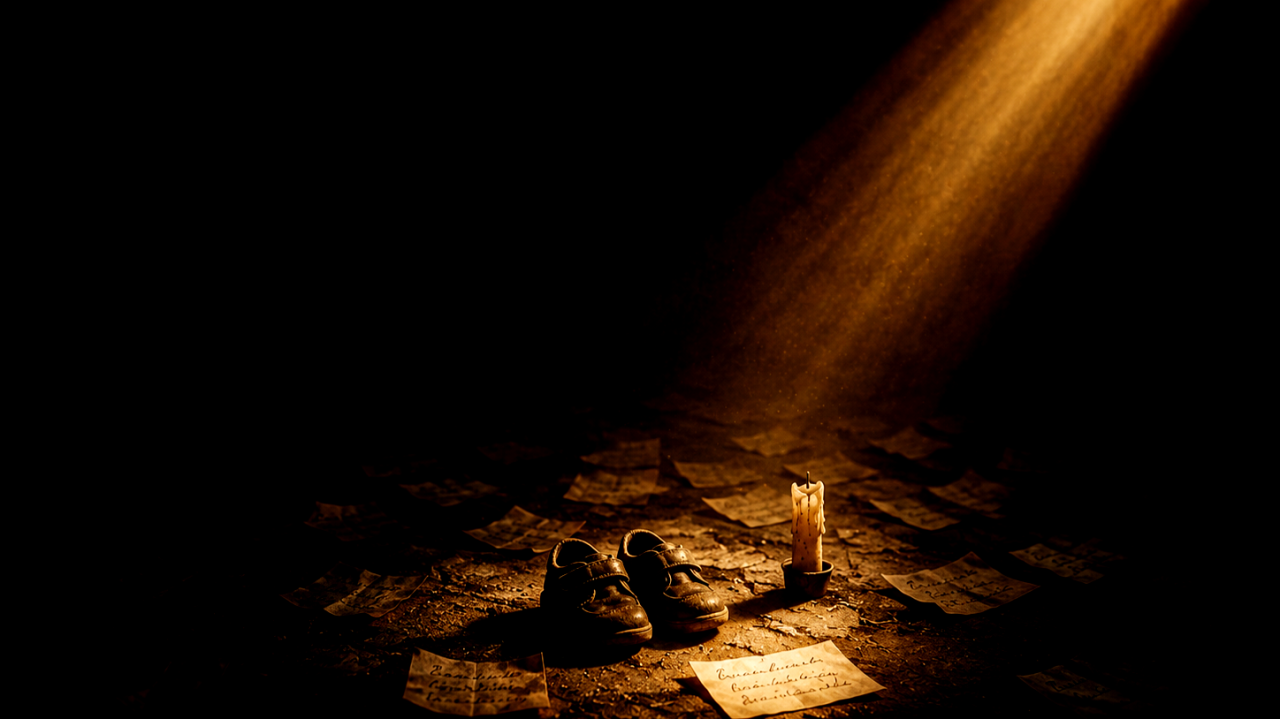
And that more than any broken law or failed system is why it keeps happening.
Aizal was eighteen months old.
Eighteen months.
She could not walk steadily. She could not speak in full sentences. She could not understand what was happening to her or why.
In August 2026, in Karachi’s Qayyumabad, she was taken by someone known to her family, violated in a way that should make every adult who reads this unable to continue normally, and returned home dying.
She died.
And across Pakistan, we did what we have learned to do with devastating consistency.
We trended a hashtag. We expressed outrage for seventy two hours. We blamed the government. We blamed the courts. We blamed the system, the era, the moral collapse of society everything large enough and distant enough that our own reflection would not appear in the answer.And then, quietly, life continued.
Because moving on is what we have perfected.
But before we move on from this article I need you to stay here for a moment.
Not for the outrage. Outrage is easy. Outrage costs nothing and changes nothing if it is not followed by something harder.
Stay because Aizal was not the first.
Zainab Ansari. Seven years old. Kasur, 2018. Abducted, assaulted, murdered, and discarded near a rubbish heap in a neighbourhood where twelve other children had been assaulted by the same perpetrator before anyone connected the pattern. Twelve children. Before anyone connected the pattern.
Farishta. Ten years old. Islamabad, 2019. Missing for days. Found in bushes, murdered, after being sexually assaulted while her family searched for her in streets she would never walk again.
Ayat Noor. Five years old. Haripur, August 2026. Reported missing. Another name. Another family shattered. Another community that did not see it coming or perhaps, quietly, did not want to.
These are the names that made headlines. In the first six months of 2026 alone, Pakistan recorded 1,914 reported cases of child abuse including more than 1,015 cases of child sexual assault. That is more than ten children harmed every single day.The names we remember are the visible surface of something vast, ongoing, and happening inside communities that pray five times a day, fast in Ramadan, and call themselves brothers and sisters in Islam.
This is Issue #9 of ONE BODY.
I will not apologise for writing it. And I ask you not to look away from reading it.
Every time a case breaks into public consciousness, the conversation follows a predictable and ultimately useless arc.
Where was the government? Where were the police? Why are the courts so slow? Why is the punishment not severe enough?
These are not wrong questions. The state has catastrophically and repeatedly failed Pakistan’s children. The legal system is broken. The institutional response is shamefully inadequate. All of this is true and all of it demands sustained, unrelenting pressure.
But here is what we do not ask the question that is far more uncomfortable, far closer to home, and far more likely to actually change something:
Where were we?
According to Sahil’s Cruel Numbers Report for January – June 2026, 43% of perpetrators were acquaintances of the victim. And 45% of incidents occurred inside the victim’s own home.
Nearly half of these children were harmed inside their own homes.
Nearly half were harmed by someone their family knew.
This is not primarily a story about strangers and darkness and random evil that descends without warning.
This is a story about communities our communities that did not build the awareness, the open conversation, the culture of protection, and the environment of safety that could have made these children harder to harm.And made the truth harder to bury afterward.
We are not innocent bystanders watching a government failure from a safe distance.
We are communities that, through silence and avoidance and misplaced notions of honour, helped create the conditions.
There is a specific mechanism that allows child abuse to survive, generation after generation, in Muslim communities.
It is not the absence of faith.
It is the presence of a silence so deeply embedded in our culture that we have mistaken it for propriety.
We do not talk about bodies. We do not give children the language they would need to name what is being done to them. We have decided, collectively and without ever formally voting on it, that these conversations are shameful too adult, too explicit, too uncomfortable for respectable households.And in making that decision, we handed predators the single most powerful tool they require.
A child who has no words for what is happening cannot report it.
We do not speak about what happens inside families. When a child is harmed by a relative and the data shows this is common the immediate instinct of the surrounding community is not to protect the child. It is to protect the family name. To manage the situation quietly. To find a path that does not bring shame to the household even if that path runs directly over the child who was harmed.
A mother who knows what happened to her child may stay silent because speaking means dismantling the family structure she has been told it is her duty to preserve.
A neighbour who suspects something may look away because involving yourself in another family’s affairs is considered intrusive.
A community elder who is approached may counsel patience and privacy because public accountability would bring shame to people he has known for years.
And the child small and confused and in pain absorbs the lesson that will define everything that follows:
What happened to me matters less than what people will think.
This is the culture that keeps predators safe.
We built it. Slowly. Without realising it. One silenced conversation at a time.
There is something that happens after silence breaks after a case becomes too visible to contain that is almost as damaging as the silence itself.
We blame the family for insufficient watchfulness. We blame the mother for a moment of inattention. We blame poverty. The neighbourhood. The era. We locate the failure precisely enough that it could not possibly apply to us.Because finding a reason why it happened to that child, in that family, in that area means reassuring ourselves that our children are safe. That we are careful enough. That this particular tragedy has a particular explanation that excludes us.
What we almost never do is look honestly at ourselves.
What conversations did we never have? What awareness did we never build? What signals did we walk past before the crisis became undeniable?
And victim blaming is not just cruel it is strategically disastrous.
Because every child in our community who is currently experiencing something they are afraid to name is watching how we respond to the cases that become public. They are running a calculation in real time:
If I tell someone will they believe me? Will they protect me? Or will they find a way to make this my fault, or my family’s fault, and make me the problem?
When they watch us question the families of victims when they see the community’s first instinct is reputation management rather than child protection they make their decision.
They stay silent.
And the cycle does not break. It deepens.
I want to be precise here. Because Islam does not leave us without direction. It leaves us without excuses.
Allah ﷻ says directly: “O you who believe, protect yourselves and your families from a Fire whose fuel is people and stones.” (Surah At-Tahrim, 66:6)
Ibn Kathir, in his tafsir of this verse, explains that this command is not passive. It requires actively guiding and guarding those under our care from harm not through prayer alone but through deliberate, sustained action. The protection commanded here is not spiritual only. It is physical, social, and communal.
The Prophet ﷺ said: “Your child has rights over you.” (Sahih Muslim, 1159)
Rights. Not preferences. Not aspirations. Rights with the full legal and moral weight that word carries in Islamic tradition. Chief among them: the right to safety. The right to a community that takes their protection seriously before a crime occurs, not only after.
The classical scholars of Islamic law from Al-Ghazali to Al-Shatibi identified five foundational objectives that all of the Sharia exists to protect. Protecting children hifz al-nasl is one of them. This means child protection is not a peripheral concern in Islam. It is structural. It is load-bearing. It sits alongside the protection of life, intellect, faith, and property as a pillar of what Islamic society is fundamentally built to guarantee.When a child in our community is harmed and we look away we have not committed a minor social lapse.
We have failed one of the foundational obligations of Islamic civilisation.
And when the Prophet ﷺ was asked about the duty to act when we witness wrongdoing, he was unambiguous. He said: “Whoever among you sees an evil, let him change it with his hand. If he is not able to, then with his tongue. If he is not able to, then with his heart and that is the weakest of faith.” (Sahih Muslim, 49)
The weakest response permitted to a believer who witnesses evil is to hate it in their heart.
Trending a hashtag and returning to normal life is not even the weakest response Islam permits.
It is beneath it entirely.
Islamic jurisprudence has a concept rarely discussed in community settings wilayah guardianship and protective responsibility over those who cannot fully protect themselves.
In classical Islamic law, this responsibility does not end with the immediate family. The community carries wilayah over children who are not being protected by those closest to them. When the guardian fails or when the guardian is the source of harm the obligation transfers outward. To neighbours. To community members. To anyone within reach of the suffering.The early Muslim community understood this instinctively. The Prophet ﷺ knew who was vulnerable. He asked about those who had not been seen. He sent people to check. He built a community in which the protection of the weak was not a charity programme it was the basic expectation of every member.
Wilayah over children means this: if you know a child is being harmed, or suspect it, or have reason to believe something is wrong the Islamic tradition does not give you the option of staying silent to preserve comfort or reputation.
It gives you an obligation.
One that does not expire.
I am not writing this to generate grief that fades in seventy two hours alongside the trending topic.
ONE BODY exists because real brotherhood is not a sentiment. It is a practice. And the most urgent practice our communities need right now is the protection of children not through hashtags alone, but through the everyday, structural, cultural work that communities do when they genuinely take responsibility for their most vulnerable members.
Here is what that work actually requires:
A body does not abandon its most vulnerable parts to whatever harm reaches them and then trend a hashtag about it afterward.
A body builds immune systems. It creates protective responses before the threat arrives. It maintains constant awareness of every part not only the visible, the strong, the loud but the smallest, the quietest, the most easily overlooked.
When one part is in pain, the rest of the body does not hold a three-day outrage cycle and return to normal functioning.
It responds. Completely. Immediately. With everything it has.
That is the standard the Prophet ﷺ set for us when he described the believers as one body. Not crisis response after the damage is done. A state of continuous, attentive, protective awareness so finely tuned that suffering registers before it becomes undeniable.Aizal was eighteen months old.
She deserved to live inside a community that had already built the conversations, the awareness, the culture of protection so that the person who harmed her either never had the opportunity, or was stopped the moment someone noticed something was wrong.
She deserved to be one body with us.
We were not one body with her.
The names we read Zainab. Farishta. Aizal. Ayat. are not just tragedies.
They are the cost of a community that kept its silence, protected its comfort, and …..
We do not have to keep paying it.
But only if we decide specifically, collectively, starting before the next name appears that our children will not face what they face alone.
The body does not wait to be told that one of its children is in pain.
It already knows. It has always known.
The only question is whether we will finally act like it.
A newsletter on linkedin about the responsibilities real brotherhood places on every one of us including the ones we have been avoiding the longest.
Part of the MUALAQ vision: rebuilding genuine human connection and communal responsibility within Muslim communities.
Before you move on from this page:
Do one thing. Not a share. Not a reaction.
One thing.
Or reach out to a family in your community carrying a weight like this. Not with advice. Not with questions. Just with presence. Just with: You are not carrying this alone. We are one body.
And if this article reached something real in you share it with someone who has the courage to stop looking away.
The children are not waiting for a perfect system.
They are waiting for us.
Data sourced from Sahil’s Cruel Numbers Report, January–June 2026, and reporting by Dawn and The Express Tribune, August 2026.

Not what we posted. Not what we felt. What we actually did and what honest brotherhood demands of us still. As of…
Salman Al-Farisi travelled for decades through four religions and three continents in search of one thing a community worth belonging to. We…
There's a man who prays next to you every Friday. You recognise his shoes. You know which row he takes. You've stood…