Youth
 IFTIKHAR UL HAQ
September 5, 2026
7 min read
He Crossed the World Looking for Us. We Can’t Cross the Street.
 IFTIKHAR UL HAQ
September 5, 2026
7 min read IFTIKHAR UL HAQ
September 5, 2026
7 min read
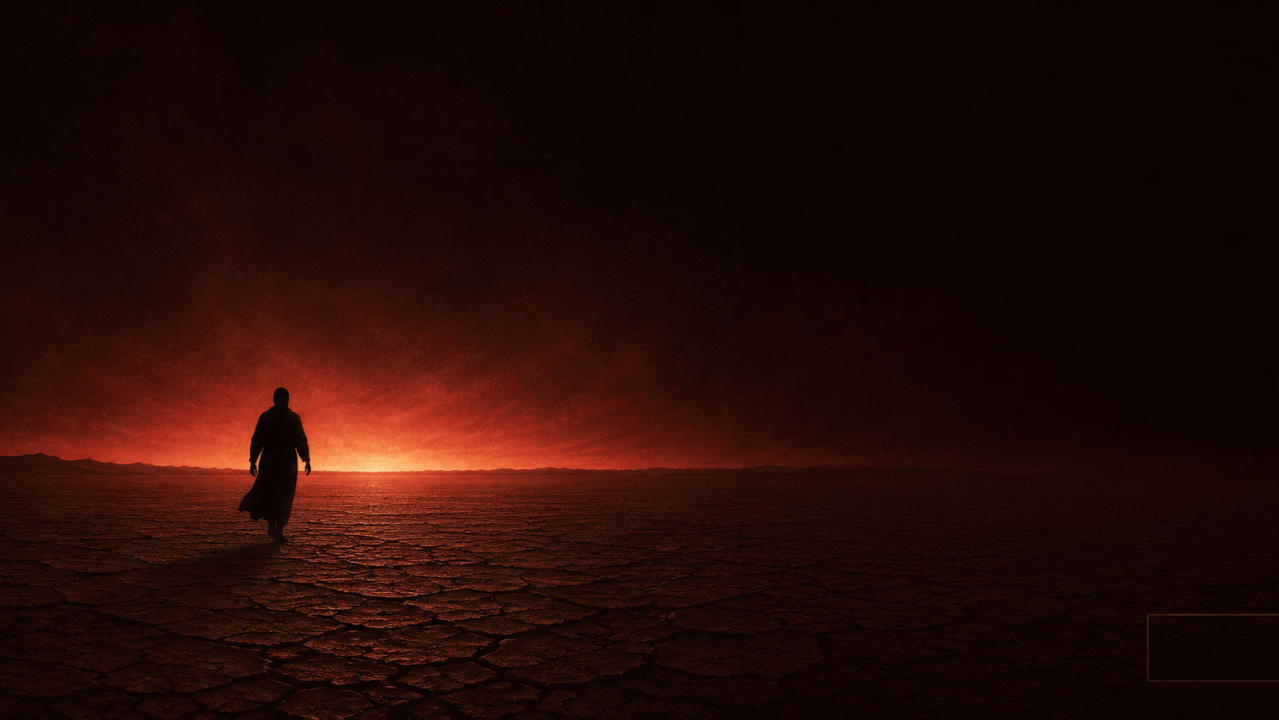
Salman Al-Farisi travelled for decades through four religions and three continents in search of one thing a community worth belonging to. We have that community. We just stopped building it.
Persia · Circa 590 CE

His name was Roozbeh. Son of a Zoroastrian priest, heir to a fire temple in Isfahan, destined for a life of comfort and status he would never choose.

One afternoon, passing a Christian church, he heard something he had never heard in a temple of fire men worshipping together with their hearts, not just their hands. He stood at the door and couldn't leave.

That night, he told his father he was no longer coming back.

What followed was not a spiritual journey. It was a physical one. He walked from Persia to Syria. From Syria to Mosul. From Mosul to Nisibis. From Nisibis toward the Hijaz as a slave, in chains, on a cargo boat, on foot.

He was not searching for a God. He had already found Him.

He was searching for a community worthy of that God.
He would eventually reach Madinah. He would sit in the presence of the Prophet ﷺ, and within moments of their meeting, be known by name Salman Al-Farisi, Salman the Persian. Not Salman the slave. Not Salman the stranger. The Persian his origin honoured, not erased.
He would become one of the closest companions. He would be claimed by so many tribes that the Prophet ﷺ himself would settle it simply: “Salman is from us from the people of the household.”
A man from Persia. With no blood connection. No tribal lineage. No language in common at the start.
He became family.
He walked across the known world to find a community that would hold him. He found it. The question that keeps me up at night is if he arrived today, where would he go?
There is a du’a for everything.
Du’a for the sick brother you haven’t visited in three weeks. Du’a for the sister whose marriage is breaking apart in silence. Du’a for the young man at the back of the Masjid who comes every Friday and leaves without a single word exchanged. Du’a for the loneliness epidemic swallowing our youth whole.
I want to be careful here because du’a is not nothing. It is not small. It is the weapon of the believer, and I would never diminish it.
But somewhere along the way, we started using it as a substitute for presence. We started treating it as the action itself, rather than the fuel that powers action.
We say “I’ll make du’a for you” the way we used to say “I’ll be there.” And the person on the receiving end smiles and says thank you and goes home alone.
A MOMENT TO SIT WITH

The Prophet ﷺ didn't only make du'a for the sick. He visited them. He sat with them. He put his hand on them. The du'a came with a body attached to it a presence that said: your pain has reached me, and I came.

The du'a was never meant to travel alone.
Salman didn’t pray from Persia that Allah would send the community to him. He got up and walked toward it across deserts, across borders, across years of hardship and slavery and loss.
The du’a was in his feet.
We are not lazy. I want to be clear about that. The Ummah is full of people who genuinely care, who would genuinely act if they knew where to go and what to do.
The problem is subtler than laziness. It’s that we built a version of faith that is almost entirely private.
Private prayer. Private Quran. Private du’a lists. Private charity sent through an app at 2am so no one knows. Private grief. Private struggle. Private everything.
And privacy, taken too far, is just loneliness with good intentions.
We have convinced ourselves that the interior life is the spiritual life that what happens between a person and Allah is all that matters, and the rest is optional. Community. Presence. Showing up. These became extra credit. Nice-to-haves. Things you do if you have the bandwidth.
But the Prophet ﷺ didn’t build the first Muslim community on WhatsApp duas and monthly fundraisers. He built it on people who knew each other’s names, sat in each other’s homes, felt each other’s hunger, and showed up without being asked.
The infrastructure was physical. Embodied. Inconvenient on purpose.
Because real community is always inconvenient. That’s how you know it’s real.
We tell the story of Salman Al-Farisi as a miracle of guidance the man who sought truth across continents and found it.
But there’s a layer we rarely excavate.
Salman’s journey only ended when he arrived somewhere physical. When he sat in a real circle. When real hands removed his chains. When a real man looked at him and said: you are one of us.
His faith was completed not in solitude, but in community. Not in private prayer, but in public belonging.
The community of Madinah didn’t send Salman a du’a and a link. They received him.
THE DETAIL HISTORIANS MENTION QUIETLY

When Salman arrived in Madinah, he was still enslaved. The companions upon the instruction of the Prophet ﷺ each contributed to purchasing his freedom. Some gave gold. Some gave date palms they had to plant with their own hands as part of the deal.

They didn't make du'a for his freedom.

They paid for it. With their wealth. With their labour. With their presence.

That is what a body does when one of its parts is in pain.
This is not a story about generosity. It is a story about infrastructure a community so structurally connected that when one man arrived broken and enslaved, the system had a response ready. Not a post. Not a prayer circle. A collective, coordinated, sacrificial act.
They had built, through years of intentional brotherhood, a community that could respond at that level. The response in the moment of crisis was only possible because of the investment made in the calm before it.
I am not asking you to stop making du’a. I am asking you to ask yourself honestly: when was the last time your du’a came with your body attached to it?
When was the last time you showed up somewhere you weren’t required to? Stayed somewhere past the point of comfort? Paid for someone’s freedom not financially, necessarily, but with your time, your presence, your willingness to be inconvenienced by another person’s pain?
Somewhere in your city, there is a Salman. He may not have crossed three continents. He may have just moved to a new neighbourhood, or come out of a divorce, or lost a parent, or left a job and found himself standing at the edges of a community that never quite pulled him in.
He is making du’a. He is hoping someone notices. He is waiting, quietly, for the community the Prophet ﷺ described to show up and say: you are one of us.
Mualaq is being built so that when he arrives you already know he’s there.
THE QUESTION THAT STAYS

Salman crossed the world to find a community worth belonging to. He walked for decades, through four religions, three continents, and years of slavery because he believed that somewhere, a community existed that would hold him fully.

He was right. That community existed. And it received him completely.

The question I want to leave you with not to answer here, but to carry:

If Salman arrived in your city tomorrow in your neighbourhood, your Masjid, your circle would he find what he crossed the world for?

Or would he get a WhatsApp number and a du'a and go home alone?
Reply to this. I read every single one. And if this issue made you feel something share it with one person who needs to feel it too. That’s how a body reconnects. One nerve at a time.
