Community Stories
 IFTIKHAR UL HAQ
August 21, 2026
6 min read
Seventy Men Slept on a Bench. The Whole City Fed Them.
 IFTIKHAR UL HAQ
August 21, 2026
6 min read IFTIKHAR UL HAQ
August 21, 2026
6 min read
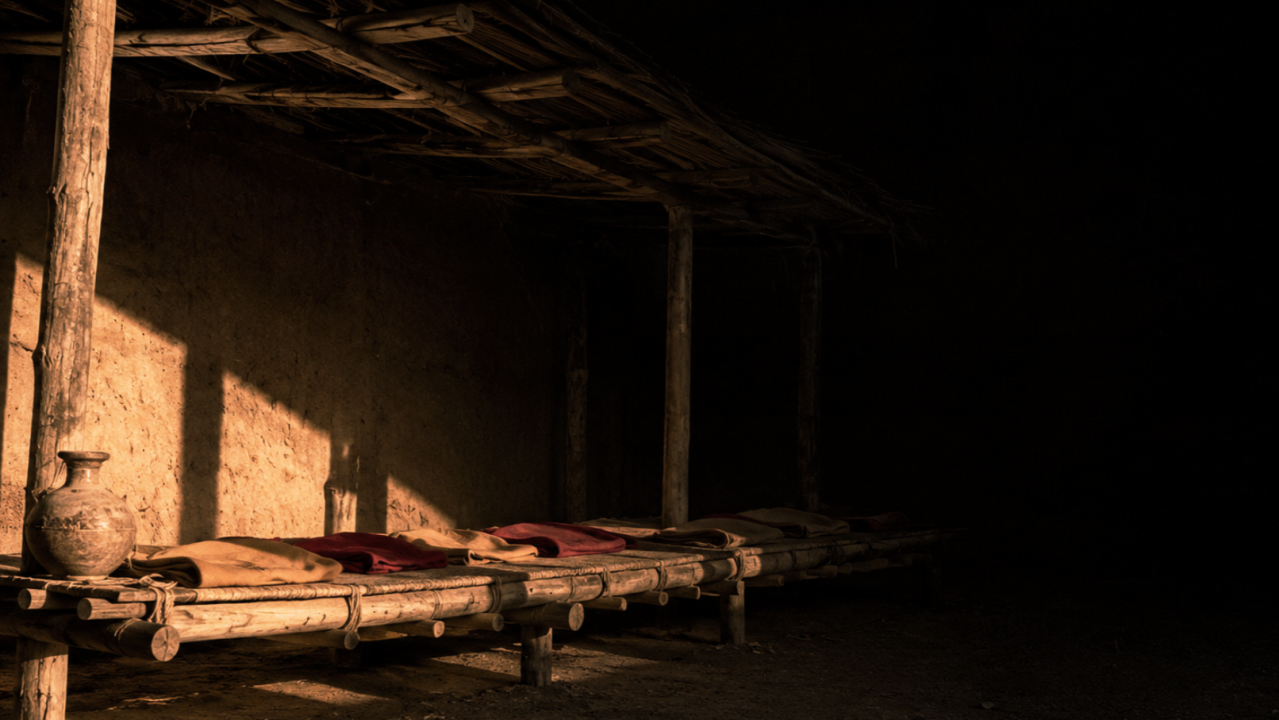
Behind the mosque in Medina was a shaded platform where the poorest, loneliest men in the community lived. The Prophet ﷺ never asked one companion to carry that weight alone. He spread it across the whole city deliberately, structurally, on purpose. We’ve forgotten how to do that, and it’s quietly burning out the few people still trying.
On the north side of the Prophet’s mosque in Medina stood a shaded platform made of palm trunks and covered in palm leaves. Nothing grand. Nothing built to impress. Just shade, and a bench, called al-Suffah.
The men who lived there the Ashab al-Suffah, “the People of the Bench” were migrants with no family left in Medina, no trade, no income, and nowhere else to sleep. Some had left everything behind in Mecca for their faith and arrived in Medina owning nothing at all.
NARRATED BY ABU HURAIRAH, SAHIH AL-BUKHARI

"I saw seventy of the People of the Suffah, none of whom had a complete garment. Each one had either an izar (waist-wrap) or a cloak, which they tied around their necks some reaching halfway down their shins, others up to their ankles each holding it together with his hand, so that his nakedness would not show."

— Sahih al-Bukhari
Seventy men. No complete clothing between them. Some went two days without food, so weak from hunger that when they stood for prayer, they would sway and nearly collapse.
This was not a hidden shame the early Muslim community tried to bury. It was written down, remembered, told and retold because what happened next is the actual point of the story.
The Prophet ﷺ never carried this alone. And he never let any single companion carry it alone either.
This is the detail most retellings skip past. The Prophet ﷺ didn’t personally feed seventy hungry men every night from his own household a household that was, by every account, often nearly as poor as theirs. He built something more sustainable than his own exhaustion.
WHAT ACTUALLY HAPPENED, NIGHT AFTER NIGHT

He would turn to the companions gathered around him and ask who could take two or three of the People of the Suffah home for the night to feed them, to shelter them, to treat them as guests of honour. Companions competed for the privilege. Sa'd ibn Ubadah, one of the wealthier Ansar, would sometimes host as many as eighty men in a single sitting. Others took what they could two, three, sometimes just one but they took them, again and again, spreading the weight across dozens of households instead of concentrating it onto one.
Read that mechanism closely, because it’s the actual innovation here. The Prophet ﷺ didn’t solve poverty by being the community’s single tireless caretaker. He solved it by making care everyone’s job, distributed in a way no one person could be crushed by it.
This wasn’t charity as a spontaneous, occasional feeling. It was structure. A near-nightly system of matching those who had capacity with those who had need organised, repeated, expected.
Every real Muslim community has a version of this: the two or three people who always show up.
The sister who’s always the one organising the food for the janazah. The brother who’s always the one driving someone to the hospital at midnight, again. The person who answers the phone every single time, because everyone else has quietly, unconsciously learned that they will.
We call them the backbone of the community and we mean it as a compliment. But a backbone that carries the entire weight of a body, alone, for years, eventually breaks. And when it does, the whole body collapses with it, because no one else ever built the muscle to hold anything up.
We didn’t design our communities to distribute the weight. We just found the people willing to carry it and let them.
This is the quiet epidemic underneath almost every burned-out community volunteer, every resentful committee member, every person who finally, exhaustedly, stops showing up after years of being the only one who did. They weren’t unappreciated. They were structurally alone in a role that was never meant to be carried by one person.
THE HONEST QUESTION

If the person who always shows up in your community disappeared tomorrow got sick, moved away, simply ran out of strength is there a structure in place to catch what they were carrying? Or would it just fall?The genius of the Suffah wasn’t generosity. Plenty of communities are generous, sporadically, when moved. The genius was distribution a system where need was matched to capacity across dozens of households, on a rhythm, so that no single family, and no single companion, silently absorbed all of it alone.
The Prophet ﷺ, the most beloved and capable man in that city, still refused to be the community’s only safety net. He built a rotation instead. He made care a shared infrastructure, not a personal sacrifice extracted from whoever happened to be willing.
We’ve inherited his example without inheriting his system. We still produce the willing few. We just never built the rotation around them.
Somewhere in your community, someone is quietly the Suffah’s entire household carrying alone what should have been distributed across dozens of hands. They haven’t said anything, because saying something feels like complaining about a role no one else even sees as a role.
Mualaq exists to make what the Prophet ﷺ built structurally possible again not one exhausted person holding a community together through sheer will, but a system that actually distributes care the way the Suffah once did. Matching capacity to need. Making it everyone’s job, in small enough pieces that no one carries the whole weight alone.
Because the story was never really about seventy hungry men on a bench. It was about a city that refused to let any one household carry them by itself.
The Prophet ﷺ, with every reason to let his own household carry the weight of the Suffah, refused to let it stay concentrated in one place. He built a rotation across an entire city instead.
Somewhere in your community, one person is quietly doing what should have been shared by dozens.
Do you know who that person is in your community? And when did you last ask them what you could take off their hands?
Reply to this. I read every single one. And if you know exactly who this is for send it to them. Let them know someone finally noticed.

There's a man who prays next to you every Friday. You recognise his shoes. You know which row he takes. You've stood…
And that more than any broken law or failed system is why it keeps happening. Aizal was eighteen months old. Eighteen months.…