Community Building
 IFTIKHAR UL HAQ
September 1, 2026
7 min read
He Never Lit the Fire. That’s What Should Terrify Us.
 IFTIKHAR UL HAQ
September 1, 2026
7 min read IFTIKHAR UL HAQ
September 1, 2026
7 min read
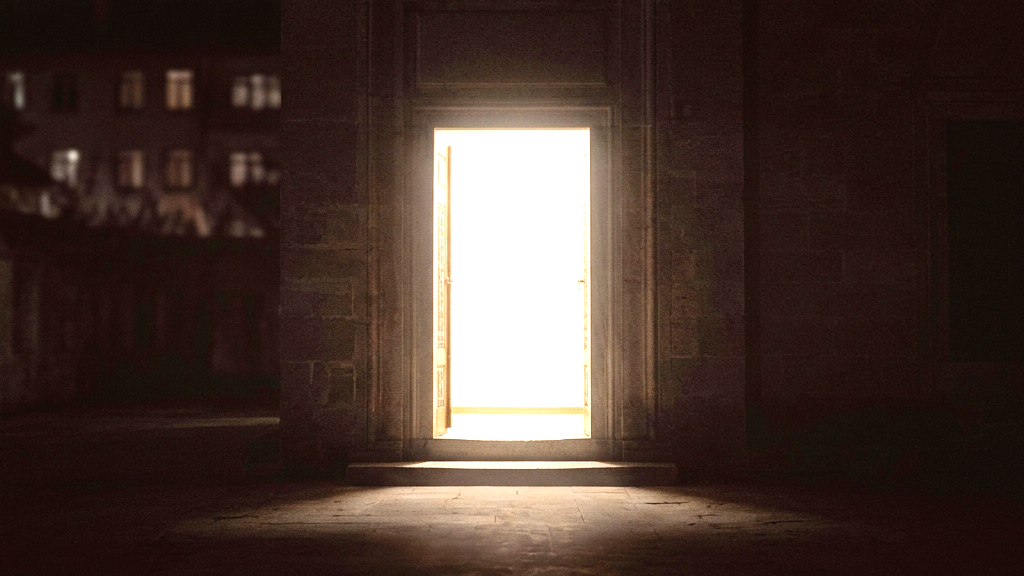
THE HADITH WE QUOTE AND RARELY SIT WITH
SAHIH AL-BUKHARI 644, SAHIH MUSLIM 651
“By Him in Whose Hand my soul is, I was about to order firewood to be collected, then order someone to call the adhan, then order a man to lead the people in prayer and then I would go to the homes of men who did not attend, and burn their houses down around them.”
Prophet Muhammad ﷺ
This is not a warlord speaking. This is not a man known for severity. This is the same Prophet ﷺ who forgave the people of Ta’if after they left him bleeding in the street. The same man who wept at graves. Who fed his enemies. Who once said, “I was only sent as a mercy to the worlds.”
And that man the most merciful human being to ever walk the earth said he wanted to burn houses over the heads of men who simply prayed at home instead of in the mosque.
He never did it. Every scholar who has examined this hadith agrees: it was never carried out, and it was never truly intended as a literal command. Islamic scholarship is clear that this was an expression of feeling “hamamtu”, “I was inclined to” not an order given, not a punishment executed. In fact, the Prophet ﷺ explicitly forbade punishing anyone with fire, saying plainly: “Do not punish with the punishment of Allah.”
So why say something that severe, if he never meant to act on it?
Because the severity was never about the punishment. It was about the size of what was being lost.
Picture the scene this hadith is describing. It’s not a man who forgot to pray. It’s not someone missing a single prayer under difficulty the sick, the traveller, the mother nursing a newborn were never the target of this warning; scholars are unanimous that they are exempted.
This is about the man who is fully capable, fully able-bodied, living close enough to hear the adhan and simply chooses, every single day, to stay inside. Alone. Comfortable. Disconnected.
The Prophet ﷺ wasn’t alarmed by missed prayer. He was alarmed by chosen isolation.
In the same hadith, the Prophet ﷺ adds something almost unbearably human: “If they knew the reward waiting for them at Fajr and Isha, they would come even if they had to crawl.” Not walk. Crawl. He knew what was on the other side of that door was worth more than any comfort inside it. And he knew most people would never find out because they never opened the door.
This is a hadith about a man watching his community quietly dissolve into separate houses, separate rooms, separate prayers and reaching for the strongest language available to stop it before it became permanent.
He wasn’t threatening fire. He was describing how urgent disconnection actually is. He used the most extreme image he could find, because the thing he was trying to prevent a Ummah that prays alone, in parallel, never in unison was, to him, a five-alarm emergency.
We didn’t need anyone to threaten us into isolation. We built it voluntarily, one convenience at a time.
We have prayer apps that vibrate a reminder and let us pray in bed. We have "spiritual content" we consume alone, at 1am, scrolling. We have entire relationships with Deen that exist exclusively between us and a screen the lecture, the reel, the recitation with no human being on the other side of it at all.We tell ourselves this counts. In some ways, it does Allah knows what’s in every heart, and private worship has its own reward. But something the Prophet ﷺ was trying urgently to prevent has happened anyway: we pray in parallel now. Alone, in our own rooms, at our own convenience, never quite arriving at the version of worship that requires us to show up for other people.
This issue is not a ruling on fiqh, and it's not suggesting anyone who prays at home out of necessity illness, distance, safety, family responsibility is failing anything. The exemptions in this hadith are real and were honoured by the Prophet ﷺ himself. This is about something else: a spiritual posture. A generation that has made solitary worship the default, not the exception not because we can't gather, but because gathering has quietly stopped feeling necessary.The threat was never really about the empty seat in the mosque. It was about what an empty seat, multiplied by thousands, does to a community’s ability to feel itself.
Twenty-five, twenty-seven times more reward for praying in congregation every hadith on this topic repeats some version of that number. For years I assumed the multiplier was purely about worship intensity. A kind of spiritual bonus round.
I don’t think that’s the whole reason anymore.
I think the reward is that large because congregation does something private prayer structurally cannot. It puts you, physically, in the same room as your community's grief, its joy, its absence. You notice when the man who's always in the second row isn't there. You notice when someone's voice cracks during the recitation. You notice when a face you know looks thinner than it did last week.Private prayer protects your relationship with Allah. Congregational prayer protects your relationship with everyone else who’s supposed to matter to you. The Prophet ﷺ built an entire architecture five times a day, the whole neighbourhood in one room specifically so that no one’s absence could go unnoticed for long.
That’s the nerve this hadith is describing. Not a threat. An early warning system.
We’ve spent three issues of this newsletter describing the same wound from different angles. The unnamed man three rows over. The hadith of the body that no longer feels its own limbs. Salman, walking continents for a community we now struggle to walk down the street for.
This hadith is the fourth angle on the same nerve.
The Prophet ﷺ built congregation as infrastructure a guaranteed, five-times-daily mechanism for a community to physically notice itself. We have slowly, voluntarily, dismantled that infrastructure in favour of private convenience. Not through any single dramatic decision. Through a thousand small choices to pray alone when we could have prayed together.
He never lit the fire. But he told us, in the most severe language he had access to, exactly how much was at stake if we let that empty row become permanent.
It became permanent anyway. In more houses than we’d like to admit including, if we’re honest, our own.
Mualaq exists because the infrastructure the Prophet ﷺ built by walking to the mosque five times a day has to be rebuilt for a century where showing up has become optional. Not to replace the mosque. To make sure no one’s absence from it goes unnoticed again.
The Prophet ﷺ used the most extreme language available to him fire, houses, punishment not because he wanted to burn anything, but because he needed us to feel the size of what disconnection actually costs.
He never lit that fire. He trusted that if we truly understood what he meant, we wouldn’t need him to.
If someone in your row stopped showing up tomorrow would anyone notice before the week was out?
And if you stopped showing up would you want them to?
Reply to this. I read every single one. And if this stirred something in you share it with others and be the part of MUALAQ.

On the lost practice that once held us together There is a concept in psychology so fundamental that researchers have spent decades…
There's a man who prays next to you every Friday. You recognise his shoes. You know which row he takes. You've stood…
On the ancient cure for the modern loneliness epidemic sitting right in front of us, five times a day. There is a…